
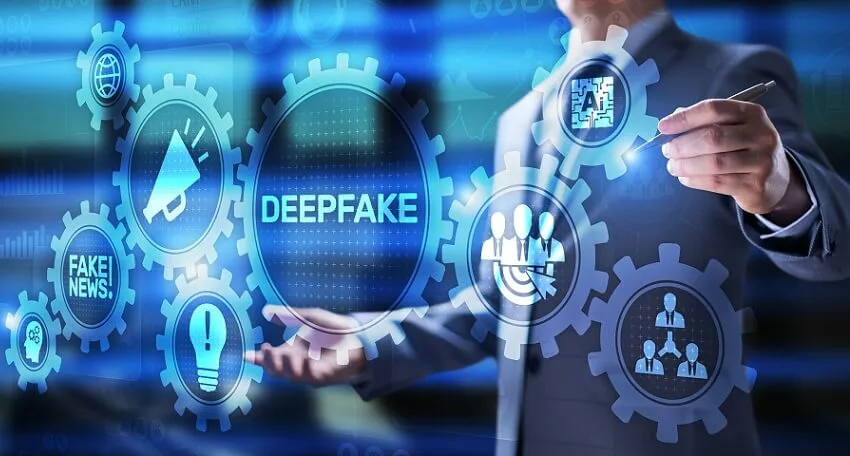
For nearly a century, photographic and auditory records served as the undisputed bedrock of corporate reality. If an audio recording captured an executive discussing illicit accounting adjustments, or if video footage showed a manufacturing defect causing catastrophic failure, the evidence was treated as empirical truth. Legal teams mobilized, boards convened emergency sessions, and communications departments shifted into containment mode based on what their eyes and ears confirmed.
That historical certainty has evaporated.
The democratization of synthetic media and generative artificial intelligence has severed the link between sensory perception and objective reality. High-fidelity voice cloning can now replicate a chief executive’s exact cadence, vocal timbre, and speech idiosyncrasies using less than a minute of clean audio harvested from quarterly earnings calls. Photorealistic video manipulation can fabricate statements that never occurred inside boardrooms that were never occupied.
For modern enterprises, the emergence of deepfakes is not merely a technical novelty or an isolated cybersecurity vulnerability. It represents an existential challenge to reputation management, requiring organizations to fundamentally rethink how they defend, project, and ethically govern institutional trust.
The Weaponization of Likeness in the Corporate Arena
Traditional corporate smear campaigns required significant planning, distribution channels, and editorial buy-in from media outlets or fringe blogs. Even in the era of coordinated social media disinformation, text-based falsehoods had to contend with critical scrutiny and independent fact-checking.
Synthetic media fundamentally bypasses that cognitive friction. Human neurology is hardwired to believe what it sees and hears; visual and auditory artifacts elicit immediate emotional resonance before analytical faculties can intervene. When an adversary deploys a convincing deepfake, the reputational damage does not unfold over days or weeks. It occurs across seconds and minutes.
The threat vectors facing corporations are multifaceted:
First, financial manipulation and market volatility represent the most immediate systemic risk. A fabricated video depicting an executive announcing an unannounced regulatory investigation, a surprise resignation, or an impending bankruptcy filing during trading hours can wipe hundreds of millions of dollars off a company’s market capitalization before verification teams can complete their analysis. Even if markets eventually correct once the deception is exposed, short sellers and malicious actors have already extracted their gains, leaving retail investors and institutional trust damaged in the wake.
Second, synthetic social engineering has moved beyond crude spear-phishing into hyper-personalized executive impersonation. Criminal enterprises routinely use real-time synthetic voice cloning to instruct financial controllers to divert capital, approve emergency wire transfers, or disclose sensitive intellectual property. When employees are confronted with what sounds precisely like their direct supervisor expressing genuine urgency, standard verification protocols often break down under psychological pressure.
Third, coordinated brand sabotage targets the ethical integrity of an organization. Fabricating audio of an executive using derogatory language in an off-the-record setting or manufacturing footage of an unsafe working environment can ignite viral boycott movements across global digital networks. By the time digital forensics proves the artifact is synthetic, the narrative has often calcified in the public consciousness.
The Perils of the Liar’s Dividend
While the threat of manufactured falsehoods is severe, an equally dangerous ethical complication lurks on the other side of synthetic media: the erosion of public accountability through what legal scholars term the liar’s dividend.
As public awareness of deepfakes expands, audiences become skeptical of all media. When every recording could theoretically be synthetic, bad actors acquire a plausible defense for genuine misconduct. A corrupt executive caught on a hot mic or an organization exposed for environmental violations can simply claim that legitimate evidence is an artificial fabrication created to disparage them.
This dynamic places ethical corporate communications teams in an untenable position. If an enterprise reflexively claims that any unflattering leaked material is a deepfake, it degrades the broader ecosystem of corporate credibility. The public eventually defaults to radical cynicism, assuming that denials are merely legal maneuvers rather than factual statements.
Reputation managers must therefore adopt a posture of absolute precision. Claiming that a legitimate disclosure is synthetic destroys institutional credibility far faster than the original scandal would have. Ethical reputation management requires proving authenticity with verifiable data rather than relying on uncorroborated assertions.
Defensive Ethics: Where Security Encounters Privacy
To mitigate synthetic risks, enterprises are aggressively adopting real-time brand monitoring tools and digital listening infrastructure designed to detect altered media across surface and dark web channels. However, these defensive measures introduce complex ethical boundaries that corporate leaders must navigate.
The Scope of Likeness Surveillance
Protecting corporate reputation increasingly entails monitoring the personal likenesses of high-profile employees, C-suite executives, and board members. When does an organization’s obligation to protect its enterprise value infringe upon an individual’s right to privacy?
If a company monitors public web spaces for unauthorized clones of its chief executive, that defensive posture is widely accepted. But as synthetic attacks target mid-level managers, procurement leads, and product engineers, the boundaries blur. Companies must define transparent policies regarding how employee biometric likenesses are monitored, stored, and defended, ensuring that defensive cybersecurity does not metastasize into pervasive employee surveillance.
Proactive Attribution and Cryptographic Provenance
Rather than relying purely on reactive debunking, organizations are transitioning toward proactive verification frameworks. The most promising long-term solution lies in cryptographic content provenance—the embedding of immutable digital signatures and metadata into enterprise communications at the moment of creation.
By signing quarterly video updates, press releases, and official communications with open standards such as the Coalition for Content Provenance and Authenticity (C2PA), companies provide journalists, analysts, and the public with a verifiable cryptographic chain of custody. If a video surfaces without this signature, third parties can immediately assess its credibility before reporting on it.
Adopting this infrastructure carries an ethical obligation: companies must use provenance standards consistently, rather than selectively deploying them only when politically convenient. Trust cannot be maintained on an ad-hoc basis; it requires an infrastructure that stakeholders can audit at will.
When the Corporation Becomes the Creator
The ethical calculus surrounding synthetic media is not solely defensive. Forward-thinking companies are actively deploying generative AI and synthetic models for internal training, customer support automation, and localized marketing campaigns.
Deploying synthetic representations of real humans offers immense operational efficiency. A single executive can record a ten-minute session that is subsequently translated and vocalized into forty distinct languages, delivering personalized messages to global offices while maintaining vocal inflection and facial alignment. Similarly, artificial customer service avatars can operate continuously without human fatigue.
However, organizations that utilize synthetic media internally while combating external deepfakes must hold themselves to rigorous transparency standards:
-
Clear and Unambiguous Disclosure: Stakeholders have a fundamental right to know when they are interacting with synthetic representations rather than human counterparts. Synthetic communications, whether external marketing materials or internal human resources videos, must feature clear visual watermarking and explicit audio disclaimers. Concealing the synthetic nature of a message to engineer false emotional intimacy is an ethical failure that undermines corporate credibility.
-
Consent and Biometric Ownership: Organizations must never generate a synthetic replica of an employee or contractor without informed, written consent. Furthermore, that consent must explicitly define the scope of use, operational limits, and expiration parameters. When an executive or staff member departs an organization, the company must retire and securely delete their synthetic model rather than treating their personal identity as corporate property in perpetuity.
-
Cultural Sensitivity and Algorithmic Bias: Generative models frequently replicate and amplify historical biases embedded in training datasets. When deploying synthetic avatars across international markets, communications teams must conduct rigorous cultural audits to ensure that synthesized vocal mannerisms, linguistic structures, and visual representations respect local contexts rather than reinforcing damaging stereotypes.
Constructing the Crisis Response Architecture
When a deepfake targeting an enterprise does surface, conventional crisis response timelines are hopelessly inadequate. The traditional playbook—drafting a statement, routing it through three tiers of legal review, and issuing a measured press release twenty-four hours later—guarantees reputational catastrophe.
Modern communications teams require an integrated crisis response protocol designed specifically for the synthetic era:
First, organizations must establish a direct line between cybersecurity forensics and corporate communications. When questionable media emerges, technical teams must be capable of conducting rapid artifact analysis—examining audio frequency anomalies, facial edge compression, and metadata discrepancies—within minutes. Comms leaders cannot effectively deny a falsehood without hard forensic data backing their claims.
Second, enterprises must cultivate relationships with specialized fact-checking consortia, social media platforms, and financial regulators before an incident occurs. Establishing verified channels allows corporate security officers to escalate dangerous synthetic manipulations to platform moderators and exchange officials for immediate flagging or trading halts.
Third, the response must focus on authoritative facts rather than defensive hostility. Denunciations should be accompanied by verifiable collateral: links to the authentic event, verifiable transcripts, cryptographic signatures, or direct access to the actual participants. Transparency neutralizes sensationalism far more effectively than legal threats.
Institutional Trust as a Deliberate Practice
The synthetic media landscape challenges the fundamental mechanisms through which commercial enterprises establish value. Products can be duplicated, software can be matched, and operational workflows can be optimized across competitors. The ultimate, non-replicable asset an organization possesses is stakeholder trust.
Treating synthetic media purely as a technical inconvenience or a public relations nuisance is a dangerous miscalculation. It is a governance priority that spans the boardroom, legal counsel, cybersecurity operations, and public relations.
In an era where seeing is no longer believing, corporate reputation can no longer rely on unverified appearances. It must be actively proven through cryptographic transparency, ethical consistency, and an uncompromising commitment to factual truth. The companies that navigate this shift successfully will not be those that simply deploy the most aggressive firewalls, but those that make verifiable authenticity the core tenet of their corporate identity.