
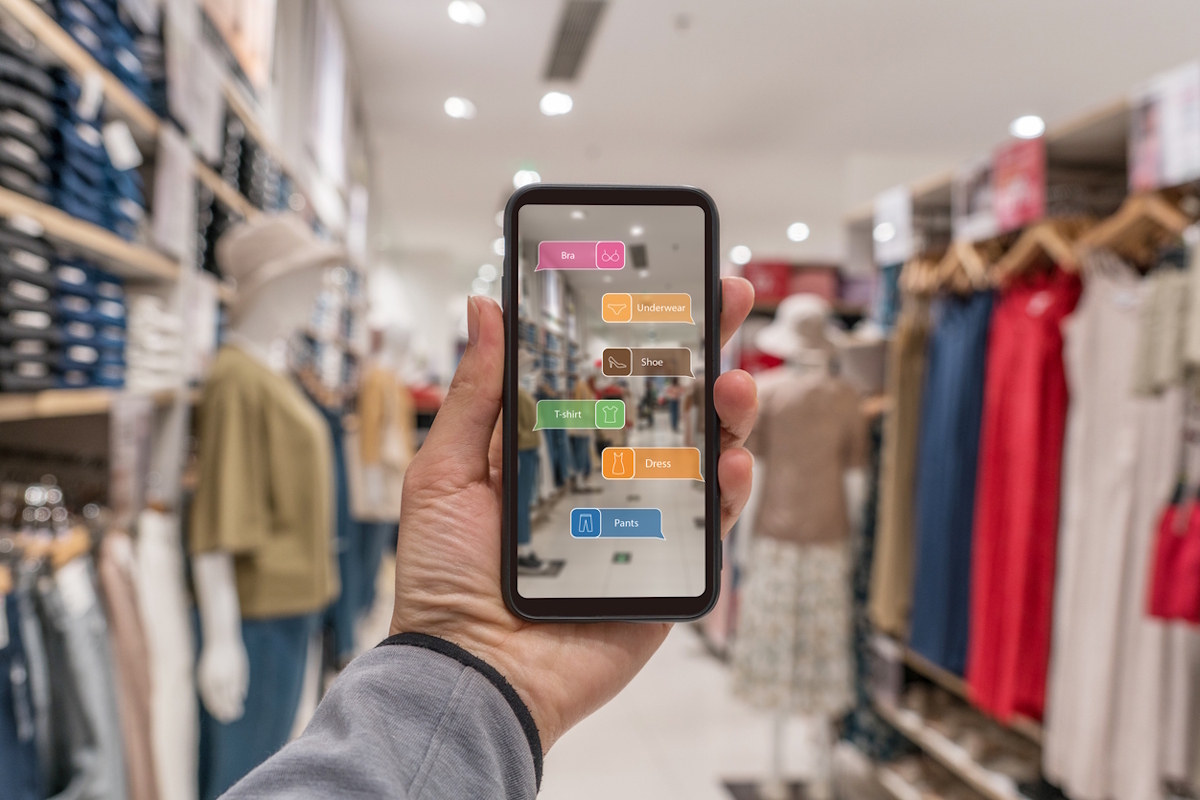
For years, the technology industry insisted that the future of spatial computing would arrive strapped to our faces. Keynotes promised an imminent era where consumers would browse digital aisles through bulky mixed-reality visors, pinching virtual shopping carts out of thin air while sitting on the living room sofa. Billions of dollars poured into hardware development, yet the consumer response remained largely indifferent. Shoppers simply do not want to wear ski goggles to buy groceries, furniture, or clothes.
While Silicon Valley watched the headset wars stall, a much more consequential shift took root elsewhere. Without theatrical product launches or cumbersome headgear, spatial computing began infiltrating everyday commerce through the devices consumers already carry and the stores they already visit.
By grounding digital intelligence in physical coordinates—using pocket-sized sensors, ambient computer vision, and browser-native augmented reality—retailers are fundamentally altering how goods are displayed, evaluated, and sold. The spatial revolution in retail is not waiting on universal hardware adoption. It is already here, and it is succeeding precisely because it is nearly invisible.
The Illusion of the Hardware-First Revolution
The fatal flaw of the headset-centric vision was friction. In retail, conversion rates fall precipitously with every additional step a customer must take. Asking a consumer to purchase a high-end device, keep it charged, calibrate optical sensors, and retreat into an isolated visual environment just to evaluate a coffee table was never a realistic consumer proposition.
Spatial computing, at its core, is not defined by head-mounted displays. It is defined by coordinate awareness, depth computation, and contextual understanding. It is the ability of software to perceive three-dimensional environments, calculate physical scale, and blend digital data seamlessly with real-world surroundings.
When understood through this lens, the primary engine of spatial retail is already in the hands of several billion people: the modern smartphone. Equipped with sophisticated camera arrays, neural processing engines, and time-of-flight LiDAR sensors, contemporary mobile devices are capable of spatial mapping that rivals dedicated industrial scanners from a decade ago. Retailers realized that instead of waiting for consumers to embrace face computers, they could leverage this ambient hardware ecosystem to solve the oldest, costliest problem in retail: the uncertainty gap.
Erasing the Uncertainty Gap in E-Commerce
Every digital purchase involves a leap of faith. When consumers evaluate an item on a flat screen, their brains must compensate for missing sensory data. They cannot touch the upholstery, gauge how a floor lamp interacts with their ceiling height, or understand whether an emerald green coat clashes with their complexion under natural sunlight.
This uncertainty carries a staggering financial toll. Return rates for online purchases routinely exceed twenty to thirty percent in categories like apparel and home goods. A massive share of those returns stems not from defective merchandise, but from fundamental misjudgments of scale, texture, and color. The cost of reverse logistics—shipping, inspecting, restocking, and often liquidating returned items—erodes retail margins at an unsustainable rate.
Spatial tools attack this problem at the point of consideration rather than the point of return.
True-to-Scale Environmental Projection
The earliest mobile AR shopping tools were crude novelties. Floating a static, low-polygon three-dimensional rendering over a camera feed often resulted in floating chairs that drifted across carpets or scaled arbitrarily based on camera angles.
Today, web-based augmented reality (WebAR) operates with millimeter accuracy directly inside standard mobile browsers. Consumers no longer need to download a standalone application to see if a sectional couch clears an awkward entryway. Modern spatial engines analyze ground planes, detect wall boundaries, and calculate ambient room lighting in real time.
When a shopper places a virtual credenza in their dining room today, the software casts accurate shadows based on the room’s actual light sources and reflects nearby wall colors off polished wood surfaces. The buyer is no longer guessing how an object might look; they are inspecting a digital twin anchored firmly in their own living space. This capability transforms a tentative browsing session into a decisive, high-confidence transaction.
Virtual Fitting and Color Calibration
The apparel and beauty sectors face an even steeper hurdle than home furnishings. Fabric moves, stretches, and drapes; cosmetics react to skin undertones and shifting ambient light.
Spatial computing is bridging this tactile divide through advanced procedural simulation. Modern virtual try-on platforms map facial topology and body landmarks through mobile lenses, simulating how pigmented cosmetics interact with varying skin textures and complex lighting environments. In fashion, physics engines now simulate fabric tension and drape against individual silhouettes. By replacing static size charts with dynamic physical simulations, brands allow shoppers to understand fit and silhouette before the garment ever leaves a distribution center.
Reimagining the Physical Store as an Interactive Canvas
The impact of spatial computing extends far beyond domestic living rooms. Brick-and-mortar storefronts, once written off by digital purists as outdated overhead, are evolving into responsive physical platforms powered by spatial software.
The Responsive Fitting Room
The fitting room has historically been the highest-friction zone in physical apparel retail. Shoppers enter with handfuls of garments, discover an incorrect size, and must either redress to search the sales floor or abandon the purchase entirely.
Intelligent spatial mirrors turn this dead space into an active digital interface. Using unobtrusive computer vision, these installations recognize the exact items brought into the stall via optical tags. The glass surface displays alternative sizing, complementary accessories, and real-time inventory counts. With a touch, the shopper can summon different sizes directly to their stall.
More advanced implementations alter the mirror’s ambient lighting conditions, allowing a customer to evaluate an evening gown under dim restaurant luminescence, direct midday sun, or fluorescent office lighting. By removing the guesswork from the fitting process, retailers keep high-intent shoppers engaged right at the moment of decision.
Micro-Wayfinding and Shelf-Level Intelligence
Navigating an eighty-thousand-square-foot home improvement store or a multi-level department store can test anyone’s patience. Traditional signage is static and broad, while store associates are often stretched thin across multiple aisles.
Spatial navigation bridges this gap by turning the store floor into an indexed physical database. Using visual positioning systems (VPS) that match camera feeds against pre-mapped point-cloud models of the store layout, mobile devices can guide shoppers directly to a specific SKU on a specific shelf with sub-meter accuracy.
As customers approach a product display, contextual overlays can surface real-time stock levels, customer reviews, compatibility warnings, and ingredient lists simply by aiming their camera at the shelf. The physical product remains central, but it gains the informative depth of an exhaustive web page.
Transforming Back-of-House Operations
While customer-facing applications garner the most attention, some of the most lucrative spatial computing deployments are quietly unfolding behind closed stockroom doors.
Maintaining consistent planograms—the precise spatial arrangement of merchandise on store shelves—is a continuous operational challenge. Corporate headquarters designs shelf layouts to maximize sales velocity, but local store execution frequently slips due to labor constraints and stock turnover.
Historically, auditing planogram compliance required human associates to walk aisles with clipboards, manually logging misplaced items and empty pegs. Today, staff can walk down an aisle sweeping a handheld terminal or tablet across the shelves. Computer-vision algorithms instantly cross-reference the live shelf state against the store’s three-dimensional digital twin, flagging misplaced items, hidden inventory, and out-of-stock tags in seconds.
Similarly, in fulfillment centers and store backrooms, spatial tracking software maps optimal picking paths for staff assembling omnichannel delivery orders. By calculating the most efficient three-dimensional routes through towering pallet racks, these systems shave critical seconds off every pick, compounding into immense labor and logistics savings across a retail chain.
Moving from Catalog Browsing to Contextual Discovery
For decades, digital commerce has adhered to a rigid layout inherited from mail-order catalogs: a white background, a handful of static photographs, a list of bullet points, and an “Add to Cart” button. This paradigm assumes that commerce is an analytical, checklist-driven activity.
Human purchasing behavior, however, is deeply contextual and emotional. People do not buy an armchair because its technical dimensions measure thirty-four inches wide; they buy it because they envision it next to their bookshelf, bathed in morning light, transforming an empty corner into a reading nook.
Spatial computing shifts commerce away from isolated catalog metrics and embeds products directly into the environments where they are meant to exist. It allows the customer to answer the core psychological question underlying almost every non-commodity purchase: Does this item belong in my life?
By answering that question within the shopper’s personal context, spatial retail replaces speculative impulse buying with grounded certainty. The brands embracing this architecture are not offering digital gimmicks to entertain casual visitors. They are systematically eliminating friction, reducing logistical overhead, and building an enduring foundation for commercial conversion. The headset may eventually find its moment in consumer tech, but spatial retail has already moved on—quietly remaking the physical and digital marketplace from the ground up.